What does a comma do. I have refused them so often and left them out so much and did without them so continually that I have come finally to be indifferent to them. I do not now care whether you put them in or not but for a long time I felt very definitely about them and would have nothing to do with them.
As I say commas are servile and they have no life of their own, and their use is not a use, it is a way of replacing one’s own interest and I do decidedly like to like my own interest my own interest in what I am doing. A comma by helping you along holding your coat for you and putting on your shoes keeps you from living your life as actively as you should lead it and to me for many years and I still do feel that way about it only now I do not pay as much attention to them, the use of them was positively degrading. Let me tell you what I feel and what I mean and what I felt and what I meant.
No one has ever accused Gertrude Stein—her memory IS a blessing, dear reader—of having too few feelings when it comes to punctuation. I adore Stein’s remarks, rambles, thoughts, observations, and passionate recollections of her life lived with punctuation. Particularly the much-maligned comma. I always tell my writing students: “Gertrude Stein didn’t use commas because she said her readers knew when to breathe” (it’s true; see the block quote a little further down). But it’s probably more truthful to say that Stein enjoyed the adventure of the page and the sentence without direction, like not receiving a program for a theater or musical performance. Don’t spoil the arrangement for Stein: let her discover whatever is about to happen. But I also love how Stein describes the work of the comma, even while she is giving it a good bashing as being “servile”—after all, isn’t it nice, sometimes, to have someone or something be attentive to you? Someone to hold your coat? Bring you a cup of coffee? Put your shoes on? I think, in this hard life, we deserve a little ease. Especially in a college essay, or in a piece where clarity and organization are of utmost importance. As Rules for Writers gently suggests, “The comma was invented to help readers” (Diana Hacker, 266). All punctuation is about musical notation—how long we are pausing between our words, phrases, and sentences—and while the comma offers us a minor pause, it is a useful one. I wrote this about the comma:
Oh, the sweet comma. The pause. It sets apart phrases. It helps you list items, say names, dates, and places, and be clear and organized. It also lets your reader (and you) breathe. Read your work aloud, and notice your pauses. But don’t place a comma simply because you stopped typing.
Stein has more to say about the comma and, tellingly, she even indulges us with using a few commas as she does so. I think this is a lovely note to close on, because it opens the door to the pleasure of complicated sentences, and turns use away from use, and towards pleasure. After all, on the spectrum of use and pleasure, explicitly creative writing (essays, poetry, screenplays, short stories, novels, graphics) bends towards pleasure, and away from usefulness. So I will close this brief piece on the comma with Stein championing the complicated sentence, and the pleasures of forgoing the comma, even while using the comma, and showing that sometimes, you just need a sweet, minor pause:
A long complicated sentence should force itself upon you, make you know yourself knowing it and the comma, well at the most a comma is a poor period that lets you stop and take a breath but if you want to take a breath you ought to know yourself that you want to take a breath. It is not like stopping altogether has something to do with going on, but taking a breath well you are always taking a breath and why emphasize one breath rather than another breath. Anyway that is the way I felt about it and I felt that about it very very strongly. And so I almost never used a comma. The longer, the more complicated the sentence the greater the number of the same kinds of words I had following one after another, the more the very more I had of them the more I felt the passionate need of their taking care of themselves by themselves and not helping them, and thereby enfeebling them by putting in a comma.
Writing prompt: Write a prose poem/paragraph or lineated poem (written in lines) without commas. Observe what happens when you write without the comma. What other punctuation do you use? How do you replace the comma? Do your sentences shorten? Do they stay the same? If you choose to lineate your piece, do you use the poetic line/lineation as a comma replacement? Extra points for including a seasonal (it’s October) flower.
I’ve decided to write a series about punctuation marks, in large part because punctuation has become the white rhino of our writing lives these days—endangered by tool-wielding humans. Autocorrect is ready to fix it for you—often against your will and best-intention, and ChatGPT and Copilot are more than willing to replace your commas with semicolons and m-dashes. Which is a problem for many new writers who are not yet entirely comfortable with these punctuation marks, long associated with complex sentences and daredevil grammatical moves.
“Why did you use this mark here?” I ask.
“I don’t know,” is often the sheepish reply.
Because in reality, ChatGPT has become the greatest user of the semicolon and the m-dash in student essays—and students are aware. Last week, a student who showed a natural inclination towards the semicolon in their writing confessed to me that they were avoiding the semicolon, because the presence of a semicolon would mark their essay as being written by ChatGPT. I pointed out that a) their instructor had told them to put their essay into ChatGPT for style and grammar correction b) ChatGPT would add semicolons c) how much better to add semicolons oneself to one’s writing d) they couldn’t let their anxiety of ChatGPT’s style control and dictate their own writing style, PARTICULARLY when ChatGPT is applying a Frankenstein of style rules it has stolen from other writers’ texts.
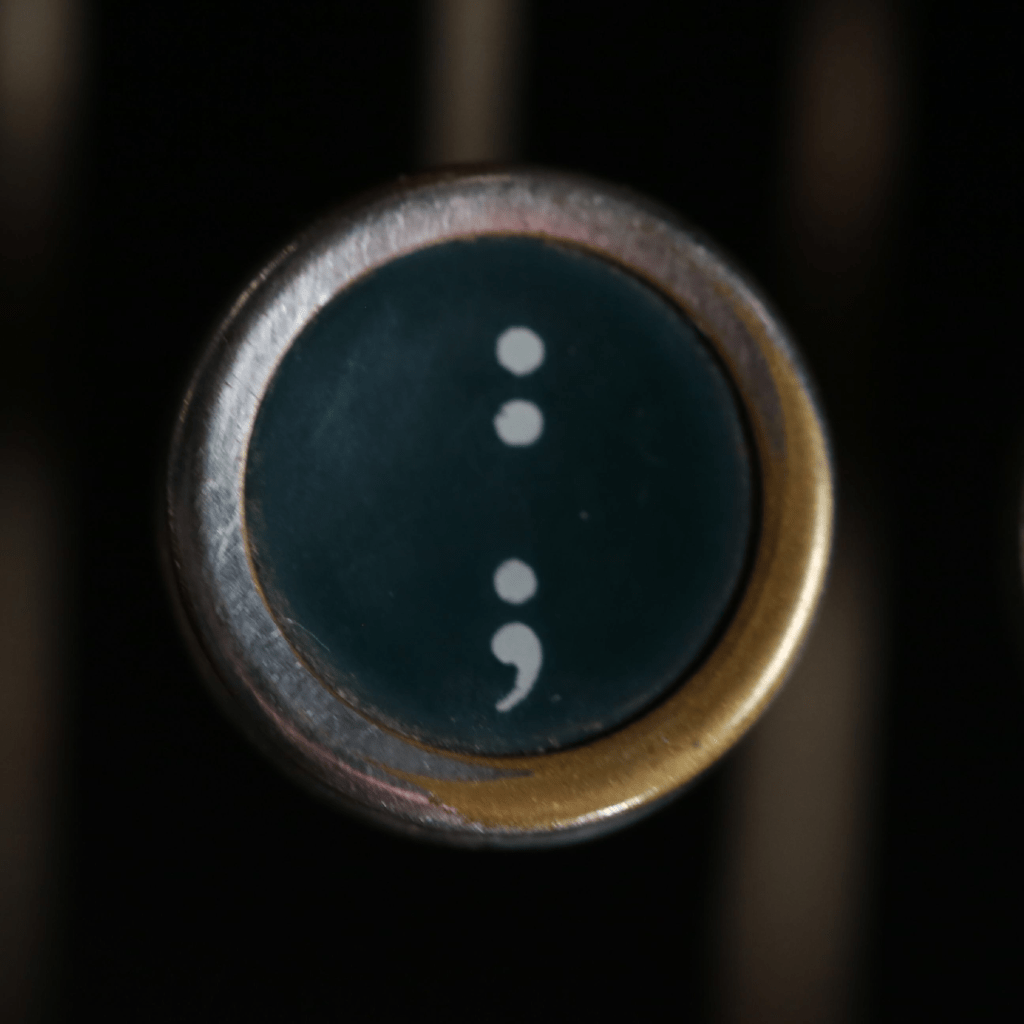
So what is the semicolon, then? How do you use it? Confidently? With withering effect? For example, I like using it in emails with someone I’m rather annoyed with, as a flex. Like yes: I do, in point of fact, know exactly how to use the semicolon; I’m that person. First, a little delightful history:
The semicolon was born in Venice in 1494. It was meant to signify a pause of a length somewhere between that of the comma and that of the colon, and this heritage was reflected in its form, which combines half of each of those marks. It was born into a time period of writerly experimentation and invention, a time when there were no punctuation rules, and readers created and discarded novel punctuation marks regularly.
That was delightful, wasn’t it? Cecelia Watson has written a whole book on the topic; I’ll report back and let you know how good it is.
The semicolon saves you from the comma splice—it’s what you need when you’re writing complex sentences, along with the m-dash and the colon. It’s in your fancy trick-bag, as a writer; it’s the hire-wire act. It says: I’m writing more than simple sentences; I’ve got two complete thoughts here, two independent clauses, and they belong together, so close their logic is!
The semicolon is about intimacy; it joins two (or more) sentences which belong together, closer than a period; the writer wants you to see something about the sentences, together. The semicolon can also function as a comma in a list of things, particularly in British usage—we see this in Virginia Woolf’s writing, frequently; I love the way the semicolon glitters down the page in Woolf’s prose.
On Of Poetry Podcast, the poet Carla Sofia Ferreira says she teaches the semicolon versus the comma splice as a marriage versus a toxic relationship. Carla also has a lovely “Ode to the Semicolon” poem in her book A Geography That Does Not Hurt Us (River River Books, 2024)! Read Carla’s poem below, and then enjoy a semicolon writing prompt.
Writing prompt: Write a piece either about the semicolon WITHOUT using the semicolon, or write a piece where you abundantly use the semicolon. ENJOY. REVEL IN PUNCTUATION MARKS. Extra points for writing your piece by hand, or in an interesting font. Extra points for mentioning a historical fact.
They look at each other across the glittering sea some keep a low profile
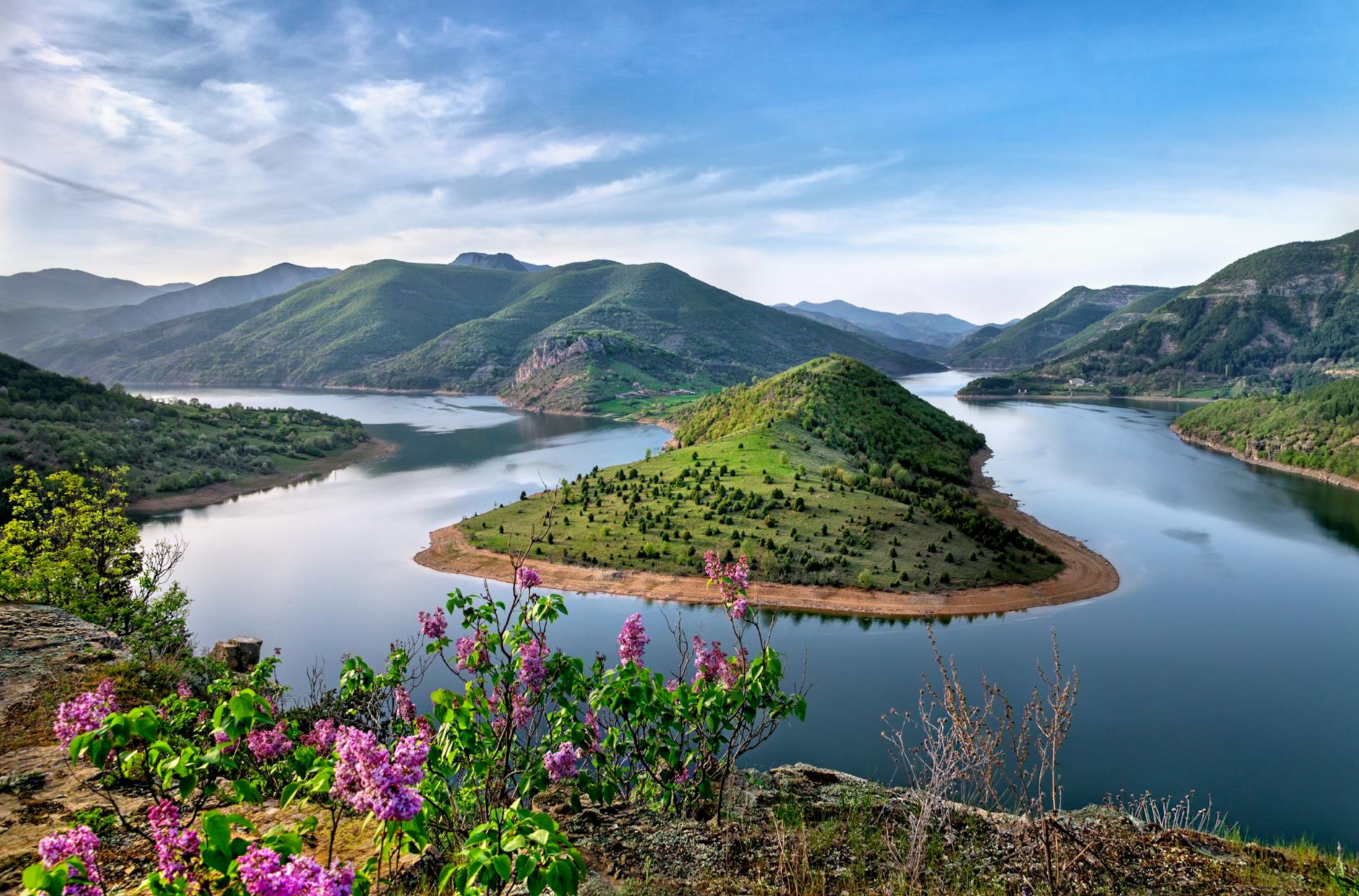
Some are cliffs The bathers think islands are separate like them
Poetry reminds me how connected we are—even in our loneliness, our quietness. Even as we read a poem by ourselves, we are connected by language to others (the writer, other readers). In Muriel Rukeyser’s poem “Islands,” the islands in the “glittering sea,” although they look physically separate, viewed distantly (objectively?) from above, are “connected / underneath.” The last couplet of the poem, “The bathers think / islands are separate like them” reveals a flaw in human looking and attention and analogy: that the bathers apply the same logic they apply to themselves, a logic of separateness and individuality, to the islands. The emphasis of the poem, an emphasis which is not a proof, returns us to connection and the deep feeling of the opening lines: “O for God’s sake / they are connected /underneath.”
Writing prompt: write a piece (poem or paragraph that could begin a story, an essay) where a physical or environmental aspect offers a point of connection—a landbridge, a beach, a cup of something warm, a wind, a puddle of tadpoles at the park. Extra points for writing a three-stanza poem, like Rukeyser.
I’ve been reading Denise Levertov’s The Poet in the World (which features this essay), a book that was once an influential text in terms of teaching poetry in college and MFA programs. The other night, sleepy, just drifting off, I was reading the conclusion of a talk Levertov delivered in 1970 entitled “Great Possessions,” and I found myself waking up, because what she says in the following paragraphs is so true, so pertinent to now, and I feel like so few academics are brave enough to say what Levertov says, and how she says it.
The TL;DR: poetry is not at all about our safety or our comfort—but about our authentic living, our surviving as communities, about the quality of our life together on this fragile earth.
Even briefer TL;DR: you want to write good poetry? You have to risk (your time, your money, probably what you think of as your reputation).
Writing prompt: after reading the below excerpt from Levertov’s talks (I promise you, it is worth it—WORTH. IT. FOR. YOUR. SOUL!) write a poem where you RISK, where you SAY what you would not SAY to ANYONE ELSE. You are not SHOWING this POEM to ANYONE. You are WRITING IT. You are SAYING THE THING, WHATEVER IT IS. You are RISKING. You can burn the poem after, (safely!) in your sink or backyard firepit or something. You can keep it in your journal. You can put it under your pillow and sleep on it and let it seep into you and make you braver. But you will have risked and articulated and accomplished some incredibly important selfwork for you and your poetry. You need to ride that language edge out—you need to dare. If your nerve deny you, wrote Emily Dickinson, go above your nerve. Bonus points if you add a living flower or shrub or plant in your poem—name it. It will be your witness plant.
Happy National Poetry Month!
Since I believe there is a most intimate relationship between the quality of a person’s life, its abundance or sterility, his integrity, and the quality of his poetry, it is not irrelevant to say that, judging by some—not a few—I have met on my travels, the people who write banal poetry and, to almost the same extent, those who in desperation make up a fake surrealism, usually seem to be the same academics who talk a liberal line concerning education and politics (and often, as teachers, are genial and popular) but who, when it comes to some crucial issue, such as a student protest, will not commit themselves far enough to endanger their own security. Which comes first, the chicken or the egg? Is their poetry banal because their lives are banal, or vice versa? I think it works both ways. If these people committed themselves, took risks, and did not let themselves be dominated by the pursuit of “security,” their daily lives would be so changed, so infused with new experiences and with the new energy that often comes with them, that inevitably their poetry would change too (though obviously this would not ensure better poems unless they were gifted in the first place). But on the other hand, if they could manage to put themselves in a new, more dynamic, less suppressive relationship to their own inner lives and to the language, then they might discover their outer lives moving in a revolutionary way. So the process is dual, and can be approached from either direction.
And for myself—not without anguish, not without fear, not without the daily effort of rousing myself out of the inertia and energy—apping nostalgia that would cling to old ways, to that dying bird-in-hand that’s falsely supposed to be worth two free ones chirping in the bushes—I believe our survival demands revolution, both cultural and political.
If we are to survive the disasters that threaten, and survive our own struggle to make it new—a struggle I believe we have no choice but to commit ourselves to—we need tremendous transfusions of imaginative energy. If it is indeed revolution we are moving toward, we need life, and abundantly we need poems of the spirit, to inform us of the essential, to help us live the revolution. And if instead it be the Last Days—then we need to taste the dearest, freshest drops before we die-why bother with anything less than that, the essential?
Wallace Stevens wrote, “The poet feels abundantly the poetry of everything.” We must not go down into the pit we have dug ourselves by our inhumanity without some taste, however bitter, of that abundance. But if there is still hope of continued life on earth, of a new life, the experience of that abundance which poetry can bring us is a revolutionary stimulus. It can awaken us, from our sloth, even yet.
Why do we want to write poems? What is behind this crazy impulse? The wish to connect with others, on a deep level, about inward things.
The pressure of emotion, which many people prefer to ignore, but which, for you, is the very substance of your work, your clay.
There’s play involved in the writing of poetry. Baby waking up. We have to be like babies waking up–trying every sound, every pitch, every word, however nonsensical. Later, be a revising adult. Babies build it up and knock it down again.
There’s the need to make sense of life behind the impulse to write.
And finally, we celebrate the world by writing about it, we observe it more closely, with more love. We are more fully alive and aware because of our efforts.
Jane Kenyon, “Everything I Know About Writing Poetry”
We are at midterms, writing papers, taking tests, submitting journal prompts, turning in many assignments, feeling overwhelmed. So, my writing prompt for you this week is to sit down and take all the pressure off yourself to do something great or achieve something. Instead, let your mind play. Let it wander. Let it use sound like colorful blocks, like a toddler builds and knocks over, shrieking with delight at their own creations and destructions. Begin with something you’ve noticed lately. Maybe the bradford pear or sugar maple is budding. Maybe you watched the black capped chickadees eat in the sweetgum branches out the dentist office window. Maybe the sky was grey and depressing this morning, but you were listening to your favorite song, and the contrast was pleasant. Journal for a little while, and see if you have the beginning of a poem or a story or an essay. Remember that the way to the universal is through the local. Remember to be a baby, waking up.
In recent years, wind turbine projects have met massive local opposition, which has resulted in several being stopped. One of the dominant arguments often used against wind turbine projects is that they destroy the Danish idyll. But if we continue as we are now, our beautiful landscape will be threatened by warmer summers, wilder weather and violent water rises. We have therefore reached the point where our image of the Danish landscape must and must change if we want to preserve the Danish idyll that we know and love.
What happens when technology–particularly-energy conserving technology–is dropped into an idyllic landscape? Particularly when that technology affects something we view as worthy of preservation and conservation: a beach scene, a forest, a wilderness, a cave painting? Doesn’t it pull against our hearts? Shouldn’t it? Consider the below scene, and how it is unsettled by the anachronism (anachronism: a person or a thing that is chronologically out of place) of the wind turbines.
Writing Prompt: Write about a landscape with an intrusion, with something else dropped in, with something that should not be there, with something that your heart wants to reject or eject or push or pull out. Landscape with Weeds. Landscape with the Fall of Icarus. Landscape with Oil Spill. Landscape with a Field of Energy-Saving Wind Turbines. Landscape with Cell Phone Towers Shaped Like Trees. This could be a story or a poem or an essay or a journal entry, or whatever you want it to be. Let the animals loose.
It’s not that I am curious. On the contrary, I am bored but it’s my duty to be attentive, I am needed by things as the sky must be above the earth. And lately, so great has their anxiety become, I can spare myself little sleep.
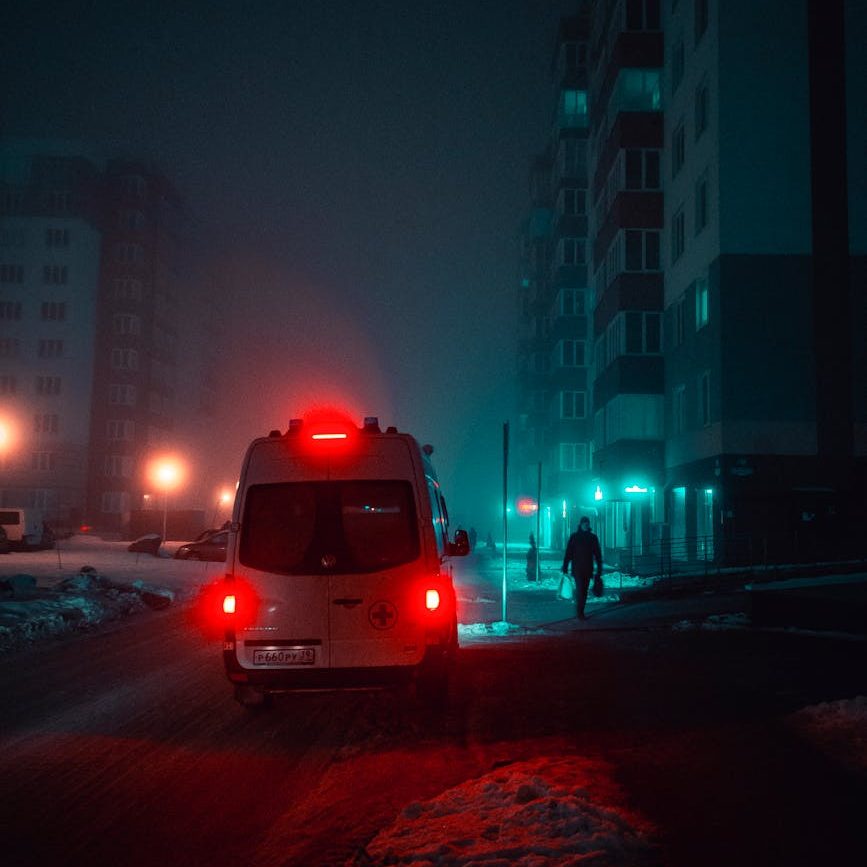
Everything seems to be in emergency lately–our pets need us during a thunderstorm, our children need us after difficult school days, our bodies react to the stress around us with headaches and pain, with illness. Maybe the emergency is a relationship in crisis, as it seems to be (at least partly, if not centrally) for the speaker in Frank O’Hara’s poem “Meditations in an Emergency”–and surely nothing is more relatable than the emergency of heartbreak and wanting to be loved, to be desired and wanted. Near the opening of the poem, O’Hara writes:
Each time my heart is broken it makes me feel more adventurous (and how the same names keep recurring on that interminable list!), but one of these days there’ll be nothing left with which to venture forth.
Why should I share you? Why don’t you get rid of someone else for a change?
I am the least difficult of men. All I want is boundless love.
Writing is one way we can release some of the tension and the anxiety from our bodies. The title of O’Hara’s poem (“Meditations…”) reminds us of the link between writing, thinking, and meditating–musing, pausing, wondering, making space for our minds to breathe.
What has felt to you like an emergency lately? Is it your sleep, or taking care of your own needs (nutrition, getting outside, exercise)? Your job, or your pile of assignments due? Not having time for friends? Or is it a larger concern, like the climate crisis, or the current governmental chaos and ineptitude, and the threat of ICE raids to our educational spaces? Of emergencies there are an abundance of choices.
WritingPrompt: Read O’Hara’s poem, and write your own “Meditations in an Emergency,” allowing yourself the space and time to wonder and wander, as O’Hara does. Do not hold yourself to a standard of perfection, but let yourself journal and muse. Remember that the word meditation comes from the Latin for to remedy (medēri), and that you are writing your way into healing by naming, first of all, what the emergency is.
What is the work of attention? How do we train ourselves to attend to the world around us? Is attention simply looking? Listening? Smelling? Tasting? Stilling ourselves and feeling our breath, the ground under us, the points of connection between our bodies and the ground, the chair we sit on? Is attention slowing ourselves, pausing, observing? The act of attention, the habit of attention is the foundation of good writing–it is the meat, the drink, the daily bread. Writers are often people watchers, world watchers–we love to walk, to take notes. We love to look up at the pines, to watch the birds. Practice attention, practice listening. “Writers notice what they notice,” says Verlyn Klinkenborg.
“[…] keep a journal in which [you] write, very briefly, six things [you see] each day—not beautiful or remarkable things, just things.”
Your prompt this week is to start keeping a notebook of attention, where you write down six ordinary things you notice every day. That’s it. And here is a longer explanation of where the prompt originates, from the poet Linda Gregg:
I am astonished in my teaching to find how many poets are nearly blind to the physical world. They have ideas, memories, and feelings, but when they write their poems they often see them as similes. To break this habit, I have my students keep a journal in which they must write, very briefly, six things they have seen each day—not beautiful or remarkable things, just things. This seemingly simple task usually is hard for them. At the beginning, they typically “see” things in one of three ways: artistically, deliberately, or not at all. Those who see artistically instantly decorate their descriptions, turning them into something poetic: the winter trees immediately become “old men with snow on their shoulders,” or the lake looks like a “giant eye.” The ones who see deliberately go on and on describing a brass lamp by the bed with painful exactness. And the ones who see only what is forced on their attention: the grandmother in a bikini riding on a skateboard, or a bloody car wreck. But with practice, they begin to see carelessly and learn a kind of active passivity until after a month nearly all of them have learned to be available to seeing—and the physical world pours in. Their journals fill up with lovely things like, “the mirror with nothing reflected in it.” This way of seeing is important, even vital to the poet, since it is crucial that a poet see when she or he is not looking—just as she must write when she is not writing. To write just because the poet wants to write is natural, but to learn to see is a blessing. The art of finding in poetry is the art of marrying the sacred to the world, the invisible to the human.
How do you ready yourself to write? Some people need a certain pen, or to sit at a certain desk, or a certain place on their couch. I like to sit with my dog, Bug, and write–pictured below. Some people write on the bus as they ride to school or work, or at school or work (I used to write my poems in class, in my notebooks–don’t tell my professors, ha). It is good to have a sense of ritual–to figure out the rhythms of your days, to try and identify what they are. Every other week, on Thursday evenings, I drive one of my children to an appointment, and I sit in the car for an hour and wait for them–that is a guaranteed quiet hour. I usually take a book with me. Try to figure out when your quiet hours are, and write or read during them. Feed yourself, your mind. Your body is not the only part of yourself that is hungry. I talk more about Bug and squeezing in writing time here.
Your writing prompt this week is to locate a regular time to write–take a look at your planner, and identify a quiet time, an odd half hour that you usually spend scrolling on your phone (haha, I do that, too). Now set down your phone, and write about the things you had to do before you allowed yourself the time and space to write. Write down some images of things you noticed throughout the day. Anything you noticed outside? Sounds you can hear as you write? Colors? Light? Scents? Enjoy the grounding time of your own writing. I especially encourage you to write longhand, with paper and a pen or pencil.
There are so many ways we think to make ourselves better in the New Year: we think about making our diets better, our bodies; we start new journals, new books, new podcasts; maybe we start a new hobby, a class, a new job. It is the turn of the year, and though it is cold and the ground is buried and the bulbs wait for warmer weather, we turn towards the light and newness.
I find myself also thinking about the verb repair–so many things are in need of fixing, and in need of our repairing attention–ourselves included. So I turned back to the dictionary, our friend for definitions and meanings and history of language, to see where the verb repair comes from:
Middle English, from Anglo-French repairerto go back, return from Late Latin repatriareto go home again, from Latin re- + patria native country
Yes, I’m thrilled by these meanings, and what they bring to the meaning of repair, and what it means to repair even something small–to fix a child’s jammed coat zipper, to put a spare tire on the car, to apologize to a friend you hurt. And this brings us to a poem about karmic repair by Richard Brautigan, a poet of the 1960s counterculture, closely following the Beat poets (Ginsberg, Kerouac, Diane Di Prima, and gang):
Karma Repair Kit: Items 1-4        by Richard Brautigan

1. Get enough food to eat,
        and eat it.
2. Find a place to sleep where it is quiet,
        and sleep there.
3. Reduce intellectual and emotional noise
    until you arrive at the silence of yourself,
        and listen to it.
4.
Your writing prompt this week is to write your own Karma Repair Kit, as a numbered list (or a paragraph, if you’d rather). Perhaps leave one numbered section blank, and spend some time imagining what needs to really go there.
What do you need to repair, to go back, to go home again to yourself?








 The Line Break